Women & Queer Psychoanalysts, No. 3.
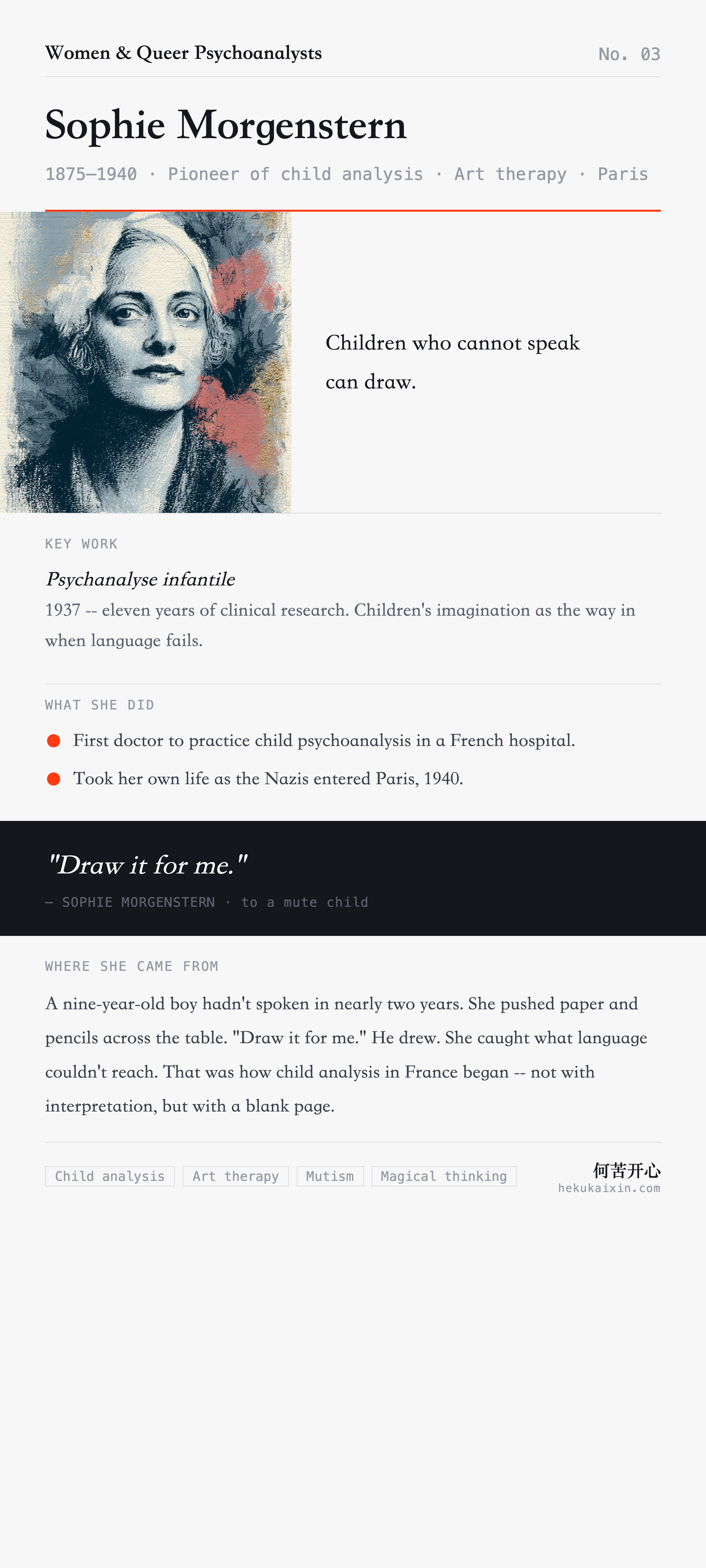
Sophie Morgenstern (1875–1940), Polish-born French psychoanalyst, pioneer of child psychoanalysis and drawing therapy.
A nine-year-old boy had not spoken a single word in nearly two years. Morgenstern saw the drawings he made at home and was struck by the anxious expressions on the figures. She pushed paper and a pencil across the table and said the sentence that would change an entire discipline: "Draw it for me."
He drew. She read through the drawings what language could not reach. This method became the core of eleven years of research, culminating in Psychanalyse infantile (1937) — she proved that children who cannot speak can still draw it out.
She was the first doctor to practice child psychoanalysis in a French hospital, building a complete clinical method that used imagination as the way in, within Professor Heuyer's child psychiatry clinic.
In June 1940, the Nazis entered Paris. A few years earlier, her only daughter had died during surgery. She took her own life on the same day the German troops arrived. She was sixty-five. The methods she left behind are still in use.