Women & Queer Psychoanalysts, No. 6.
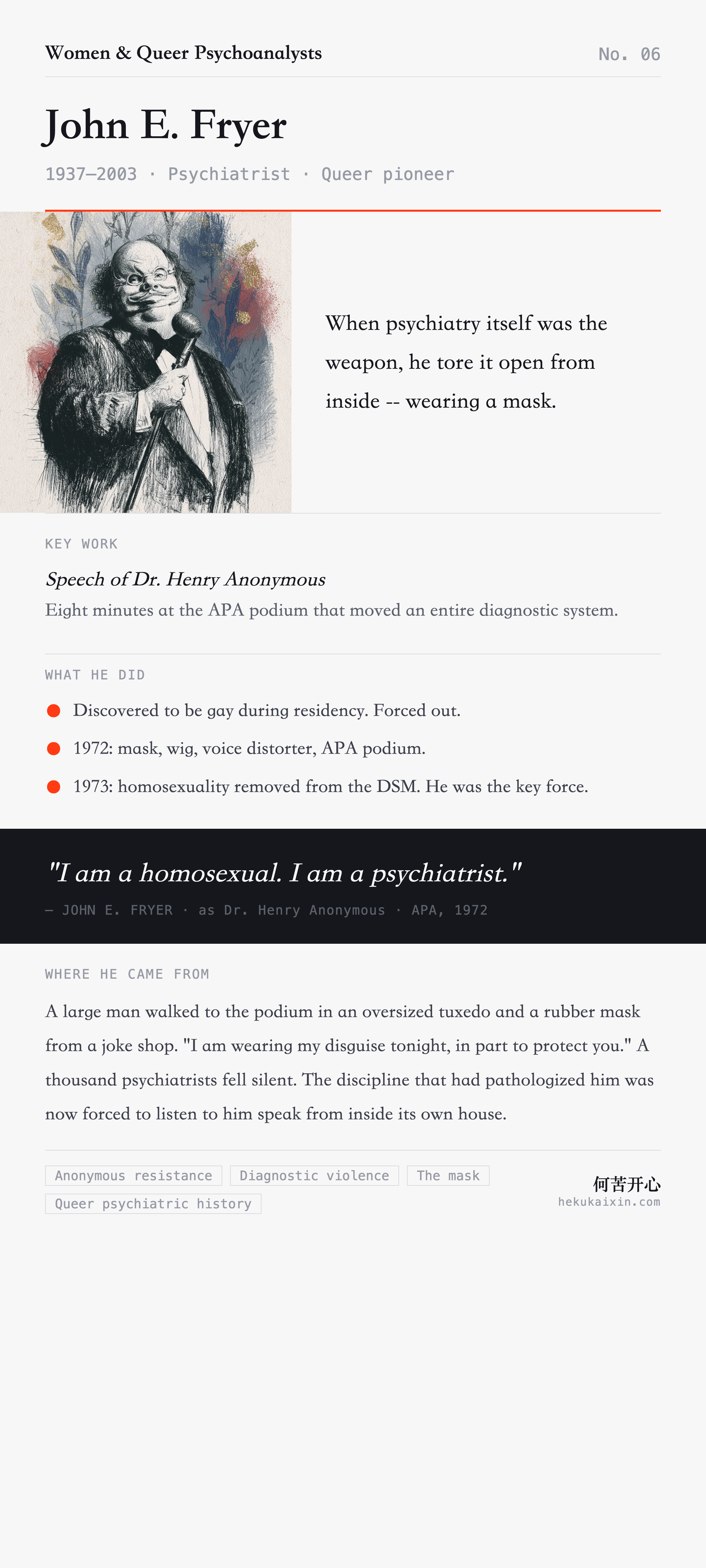
May 2, 1972. The annual meeting of the American Psychiatric Association. A man — six-foot-four, nearly 300 pounds — stepped onto the stage from the wings. He wore a tuxedo three sizes too large, a rubber mask from a novelty shop, a crooked wig. His voice was distorted beyond recognition by the microphone.
He said: "I am wearing a disguise tonight, partly to protect you."
Then he spoke the eight most important words in the history of psychiatry: I am a homosexual. I am a psychiatrist.
Over a thousand psychiatrists in the audience went silent.
His name was John E. Fryer (1937–2003). He had been forced out of the University of Pennsylvania's psychiatry residency program after being discovered to be gay. In that era, homosexuality was classified as a mental illness — by his own discipline.
His eight-minute speech became a turning point. In 1973, the American Psychiatric Association officially removed homosexuality from its diagnostic classification.
Fryer never stood on that stage without a mask. He died in 2003, leaving behind 217 boxes of archives. The APA established an award in his name, honoring psychiatrists who advance LGBTQ+ rights — he was publicly recognized only after his death.